

|
The Age of George III |
I am happy that you are using this web site and hope that you found it useful. Unfortunately, the cost of making this material freely available is increasing, so if you have found the site useful and would like to contribute towards its continuation, I would greatly appreciate it. Click the button to go to Paypal and make a donation.
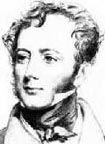
William Hulton was born in 1787 at Hulton Park, Lancashire. His father was the High Sheriff of Lancashire, Hulton was educated at Cambridge; he later married his cousin, Maria Ford, and they had 13 children. His father had died when Hulton was 12, he inherited the family estates. These included substantial coal-mining interests at Westhoughton. At the age of 24, Hulton became High Sheriff. In 1811 he was responsible for the arrest of twelve Luddites who had set fire to a Westhoughton weaving mill. Four of them, including a twelve year old boy, were hanged. He had another man at a Westhoughton mill transported for seven years for "administering oaths".
During the 18-teens, it became increasingly clear that England was suffering from great social, economic and political upheavals. These problems collectively became known as the 'Condition of England Question'. The distress and discontent caused by these enormous changes were manifested in a series of events in the period 1811-19. In 1819, Hulton chaired the committee of Lancashire and Cheshire magistrates, a body established to deal with the unrest which was sweeping the manufacturing districts. He took up his post in July, a month before Peterloo. It was he who read the Riot Act on St Peter's Fields, and he who sent in the Manchester and Salford Yeomanry. Hulton insisted that only two people had been killed at Peterloo, one of them a a special constable, and he described 16 August as "the proudest day in my life." The Home Secretary, Sidmouth, sent him a message of congratulations.
Hulton spent the rest of his life haunted by the events of 1819. Frightened of the abuse he might receive while campaigning, he turned down a safe Tory seat in the Commons in 1820, and in 1841 he was attacked while campaigning for the Tory candidate in Bolton and had to be rescued by party workers. His assailants had chanted "Peterloo" at him. As a mine owner, Hulton was important in the development of the Bolton-Leigh Railway in 1825. He died in 1864.
| Meet the web creator | These materials may be freely used for
non-commercial purposes in accordance with applicable statutory allowances
and distribution to students. |
Last modified
12 January, 2016
|